Bridgestone launches research to identify "elite" rubber trees
14 Apr 2026
Share:
Tie-up with universities looks to shorten breeding timeline through “high-precision” selection of promising trees
Tokyo, Japan — Bridgestone has launched a joint research project with Japanese and Indonesian universities to carry out genetic analysis of para rubber trees in order to improve productivity and support a more stable supply of natural rubber (NR).
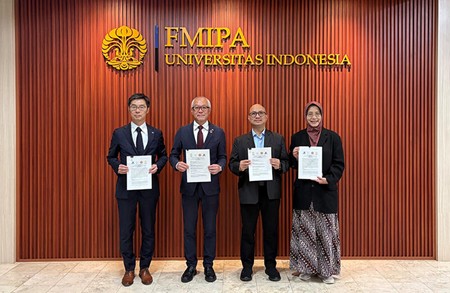
The collaboration with Universitas Indonesia, Yokohama City University and Maebashi Institute of Technology will use trees and genetic data from Bridgestone’s plantation in Indonesia.
As part of the project, the partners will work to develop a “marker-assisted selection technology” to enable the early identification of “elite trees,” said Bridgestone 9 April.
Elite trees are “high-yielding, stable performers,” explained Bridgestone adding that ‘marker-assisted selection’ is a breeding approach that uses DNA markers to predict future traits and select promising individuals at the seedling stage.
Bridgestone said the approach could “significantly shorten” breeding timelines, which have traditionally taken decades, by allowing “high-precision” selection at an earlier stage.
The group went on to note that NR supply remains constrained by the crop’s geographic limitations and exposure to “external factors such as climate change and disease.”
Furthermore, the rising global vehicle demand is expected to increase pressure on supply chains.
The project will see Universitas Indonesia responsible for obtaining genetic data, including DNA and RNA, while Yokohama City University and Maebashi Institute of Technology will conduct analysis to identify genes linked to productivity.
Bridgestone will provide latex samples and existing genetic information, with the partners aiming to establish a system for selecting and propagating higher-performing trees over the medium to long term.
“In this project… we will drive high-precision genome analysis and the selection of promising lines,” said Yukihisa Shimada of Yokohama City University.
The faculty of mathematics and natural sciences, Universitas Indonesia, will meanwhile, leverage its expertise in molecular biology and genetic data acquisition.
“We are trying our best to reinforce the ecosystem of global natural rubber production and provide significant innovation to support sustainable rubber plantations in Indonesia," said Prof Dr Tito Latif Indra of Universitas Indonesia.
This article is only available to subscribers - subscribe today
Subscribe for unlimited access. A subscription to European Rubber Journal includes:
Every issue of European Rubber Journal (6 issues) including Special Reports & Maps.
Unlimited access to ERJ articles online
Daily email newsletter – the latest news direct to your inbox