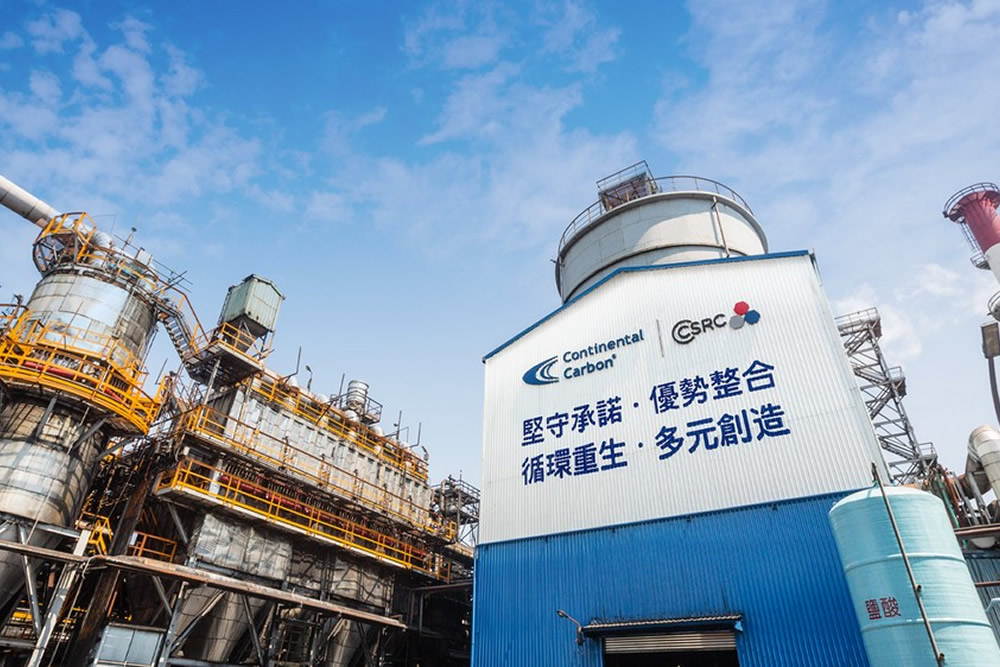
Group moves away from commoditised grades amid oversupply, targets carbon nanotube expansion
Taipei – International CSRC Corp. is shifting its focus to speciality materials as the global rubber carbon black markets remain under continued oversupply and price pressure in the traditional market.
In a 26 May report from its latest shareholders’ meeting, the Taiwanese group and parent of Continental Carbon said it has accelerated its shift into speciality grades and high-end conductive materials, announcing the start of single-walled carbon nanotube (SWCNT) commercial sales.
The group stated that with the rapid development of AI, electric vehicles and new energy industries, the demand for high-end conductive materials continues to increase.
As a result, it said, it is speeding up advanced carbon materials strategy “to expand its growth momentum.”
“The traditional carbon black market continued to be affected by oversupply and price competition in 2025, and the operating performance in various regions faced challenges,” CSRC said without providing financial details.
“Therefore, the company has launched a global operating strategy and product structure adjustment [in the rubber segment],” it added.
In the US, at its Ponca City, Oklahoma plant, CSRC said it “repaired and upgraded” equipment in the first quarter of 2026, with capacity utilisation rising to 84% in April from 65% in 2025.
The site had previously been affected by operational disruptions, but group said the upgrade had restored output stability and improved operating efficiency.
CSRC did not give further detail on product mix but indicated the facility remains a key base for North American supply.
In mainland China, the group said it has completed the disposal of its Chongqing rubber black plant and closure of its Anshan facility in Liaoning province, as part of what it described as efforts to “reduce losses” and shift its footprint further away from commoditised carbon black production.
CSRC said remaining operations are increasingly focused on speciality grades, with a continued reduction in exposure to low-margin standard products amid weak domestic pricing conditions.
In India, at its Dahej plant, the group said it has adjusted its order-taking strategy in response to the “continued expansion of local competitors”, difficulties in raw material procurement and ongoing price competition.
Furthermore, the supplier said it increased the proportion of tire-related customer orders while reducing export sales, with the plant remaining a key supply hub for both domestic demand and regional distribution despite margin pressure.
In Turkey, the group confirmed progress on its Iskenderun project, where a new rubber grade plant with annual capacity of around 170 kilotonnes per annum (ktpa) is scheduled to begin production in 2027.
The facility, it siad, will serve both the domestic Turkish market and European customers, and is expected to strengthen its regional supply position in "a structurally import-dependent market."
Against this regional restructuring, CSRC said the traditional carbon black market “will continue to be affected by oversupply and price competition”, reinforcing its global shift towards speciality products.
Among other products, the group said it had begun sales of SWCNTs, describing the product as a key step in its development of high-end conductive materials for lithium batteries, semiconductors and advanced electronic applications.
SWCNTs, said CSRC, are also being applied in rubber and plastic materials linked to the electronics and semiconductor supply chain.
The group said it has already secured “multiple commercial orders”, while noting that global demand for SWCNTs is estimated at more than 200 tonnes compared with effective supply of around 90 tonnes, indicating a “continued supply shortage”.
CSRC said its planned SWCNT capacity is expected to reach around 600kg by the end of 2026 and exceed 2 tonnes per year in 2027, as it scales commercial production alongside its broader speciality carbon materials strategy.
The group said it posted weaker profitability in 2025 due to competitive pressure, raw material volatility and one-off items.
However, it said, expects operating performance and cash flow are expected to “show an improving trend” as restructuring measures and product portfolio upgrades take effect.