Software-based system uses existing vehicle data, no additional sensors, and is compatible with all tire brands
Clermont-Ferrand, France – Michelin is rolling out what it calls a “universal tire digital twin” — a software-based system designed to turn existing in-vehicle data into real-time driving insights, without the need for any additional tire-mounted sensors.
In a 21 May statement, Michelin said the new offering is aimed at providing ‘safer driving, better performance and a more predictable driving experience, regardless of vehicle or tire brand.’
Michelin is positioning the technology as a software-only, embedded intelligence layer that can be integrated across vehicle types, from passenger cars to trucks and even autonomous shuttles.
“This innovation aims to ensure a safer driving experience for everyone by allowing the vehicle to anticipate its behaviour and improve performance without requiring input from physical tire sensors,” the French group said.
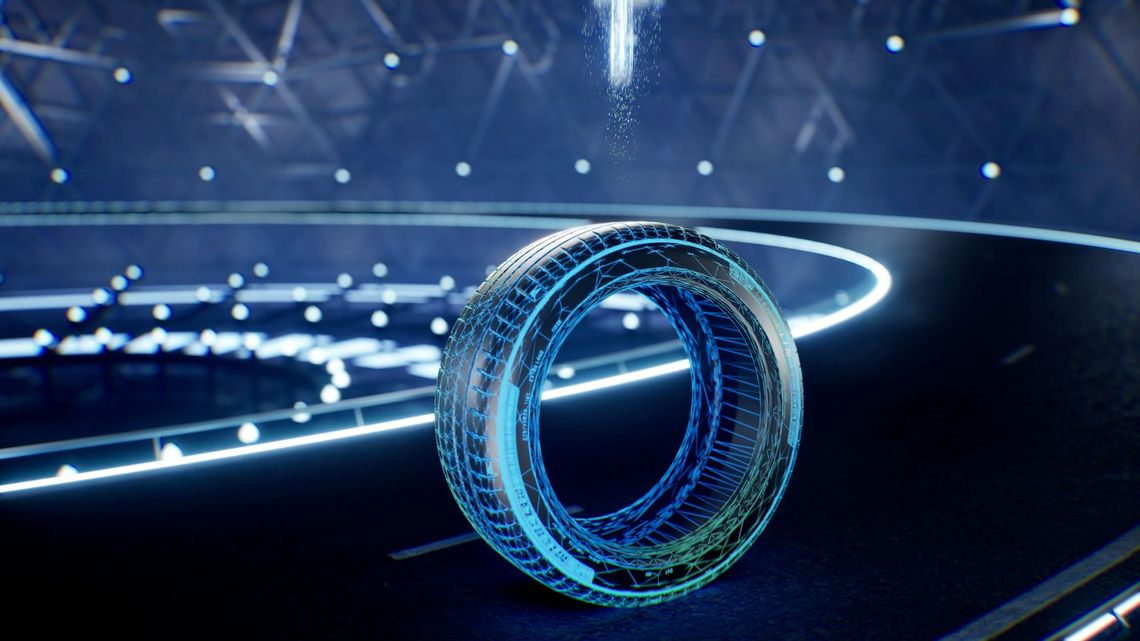
At its core, the digital twin is a continuously updated “virtual replica” of a tire.
It analyses and predicts tire condition in real time, factoring in pressure, wear, load, grip and driving conditions and then compares the data with live vehicle data.
Unlike traditional systems, the digital twin "doesn’t simply supply information to the vehicle and driver, it directly interacts with the embedded systems to optimise their performance,” Michelin said.
That interaction is used to support braking systems, stability control and driver assistance features.
The feature can help anticipate maximum grip, reduce the risk of aquaplaning, improve ABS performance and detect overloading, said Michelin.
It can also monitor tire pressure and adjust vehicle behaviour accordingly.
The result, according to Michelin, is more stable driving, more efficient braking, and in some cases shorter stopping distances “by as much as several metres”.
Furthermore, the system “is fully integrated, and drivers are not even aware that it is working behind the scenes,” Michelin said.
Michelin also noted the maintenance benefits of the system, which will continuously monitor tire behaviour and condition and support predictive maintenance and extend tire life.
A key feature of the system, according to the French group, is its ‘universality.’
“Michelin’s 100% software-enabled embedded intelligence-driven system makes use of existing in-vehicle data without requiring additional tire-mounted sensors,” the company said.
It is also designed to align with the shift toward software-defined vehicles, where functions and performance can be updated over time through software rather than hardware changes.
Michelin said the technology is the result of more than 10 years of R&D, backed by patents and validated through “several million kilometres” of testing.
The company has been building partnerships across the automotive ecosystem, including with Brembo, Hyundai, QNX, ETAS and Sonatus, as it moves towards industrial deployment.
One example is its collaboration with Brembo on the Sensify braking system.
In that partnership, by integrating real-time tire condition data into braking algorithms, Michelin said it helped improve braking performance and stability, with stopping distances reduced by “up to 4 metres” in hard braking scenarios.