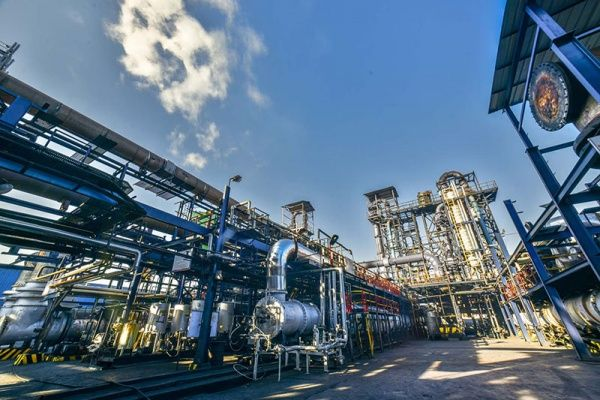
Indian carbon black supplier adds 90ktpa capacity as customers shift to “just-in-case” inventory strategy
Mumbai, India – PCBL Chemical is seeing a recovery in the global rubber carbon black sector after a year of “significant headwinds”, as customers increasingly move away from “just-in-time” inventory models amid supply chain disruption.
In a full-year earnings call 30 April, managing director and CEO Nilesh Koul said the fiscal year 2026 (ended 31 March 2026) had been shaped by 'softer benchmark spreads', excess domestic capacity, geopolitical uncertainty and a “sharp inventory adjustment” by international customers.
“Most of these pressures persisted through the fourth quarter and FY26 as a whole,” Koul said, adding that the year was characterised by “challenging macroeconomic and industry environment.”
Signs of recovery
However, Koul added, "while we faced significant headwinds last year, the broad industry dynamics have now started to show clear signs of recovery."
Benchmark spreads, he said, appear to have “found a floor” and quarterly momentum turned positive.
Pointing to the “rationalisation” of US tariffs, Koul said the development had restored a “meaningful cost advantage” for Indian exports.
Meanwhile, the India-European Union free trade agreement would eventually provide “duty-free access to a 1.8 million tonnes/year carbon black market,” he added.
“We expect this recovery to consolidate progressively over the next two to three quarters,” the company leader said.
According to Koul, over the final quarter of the fiscal year, PCBL added 90 kilotonnes per annum (ktpa) of rubber carbon black capacity through a brownfield expansion at its Tamil Nadu site.
This, he said, will take total installed capacity to 880ktpa.
Koul said the additional capacity would help meet growing customer demand as tire makers increase inventory levels to protect against supply chain disruptions.
“We are seeing a trend of stocking up at the customer level,” he said, adding that global tire producers are shifting from “just-in-time to a more resilient just-in-case approach.”
Middle East conflic impact
PCBL said the escalation of the Middle East conflict from February had caused “significant disruptions” across its supply chain, increasing feedstock, freight and packaging costs.
Around 75% of the group’s raw materials are sourced from the US Gulf Coast, while roughly 40% of its business is tied to exports.
According to Koul, vessels serving Europe and the US are being rerouted around the Cape of Good Hope, extending transit times by at least 14 days and sharply increasing logistics costs.
“This rerouting has tightened container availability globally,” he said, adding that freight rates remain “significantly elevated” compared with pre-conflict levels.
The company said raw material costs also rose sharply during the quarter as Brent crude increased from around $60/barrel to $100/barrel by the end of March.
As of the earnings call, crude prices were hovering near $120/barrel, according to Koul.
PCBL noted that many of its contracts with major tire producers include quarterly pricing mechanisms, meaning the full effect of higher raw material costs is expected to flow through by the second quarter of fiscal 2027.
Results down
For the quarter ended 31 March, consolidated rubber carbon black sales volumes rose 8% year-on-year to 161,865 tonnes.
Domestic sales increased 21% to 105,055 tonnes, while export sales fell 10% to 56,800 tonnes.
Segment revenue for the quarter was up slightly, 0.7% year-on-year, at INR16.8 billion (€150 million), while operating profit fell 12% to INR18.9 billion.
For the full year, segment sales fell 4.2% to INR65 billion while earnings dropped 30% to INR7.2 billion.