DRC eyes eastern Europe expansion as moves beyond mixing services
10 Mar 2026
Share:
CEO says Turkish rubber compounder plans €12–15m investment in Europe to broaden offerings
Hanover, Germany — Turkish rubber compounder DRC is planning to expand into eastern Europe with a €12–15 million investment as the company looks to move closer to customers and broaden its offerings and target end-clients.
Speaking to ERJ at the Tire Technology Expo in Hanover earlier this month, CEO Dr Asli Bezek said the company is evaluating locations in eastern Europe with strong automotive industries as part of its next growth phase.
“We are in search of a new location to invest in,” she said, adding that the move is aimed primarily at serving technical rubber goods and non-tire customers in the region.
“The most likely option is eastern Europe, in countries where the automotive industry is really strong,” Bezek noted, stressing the strategic policy to broaden clientele beyond tire industry.
Founded in 1978, DRC operates as a custom rubber mixing company supplying both tire manufacturers and non-tire sectors.
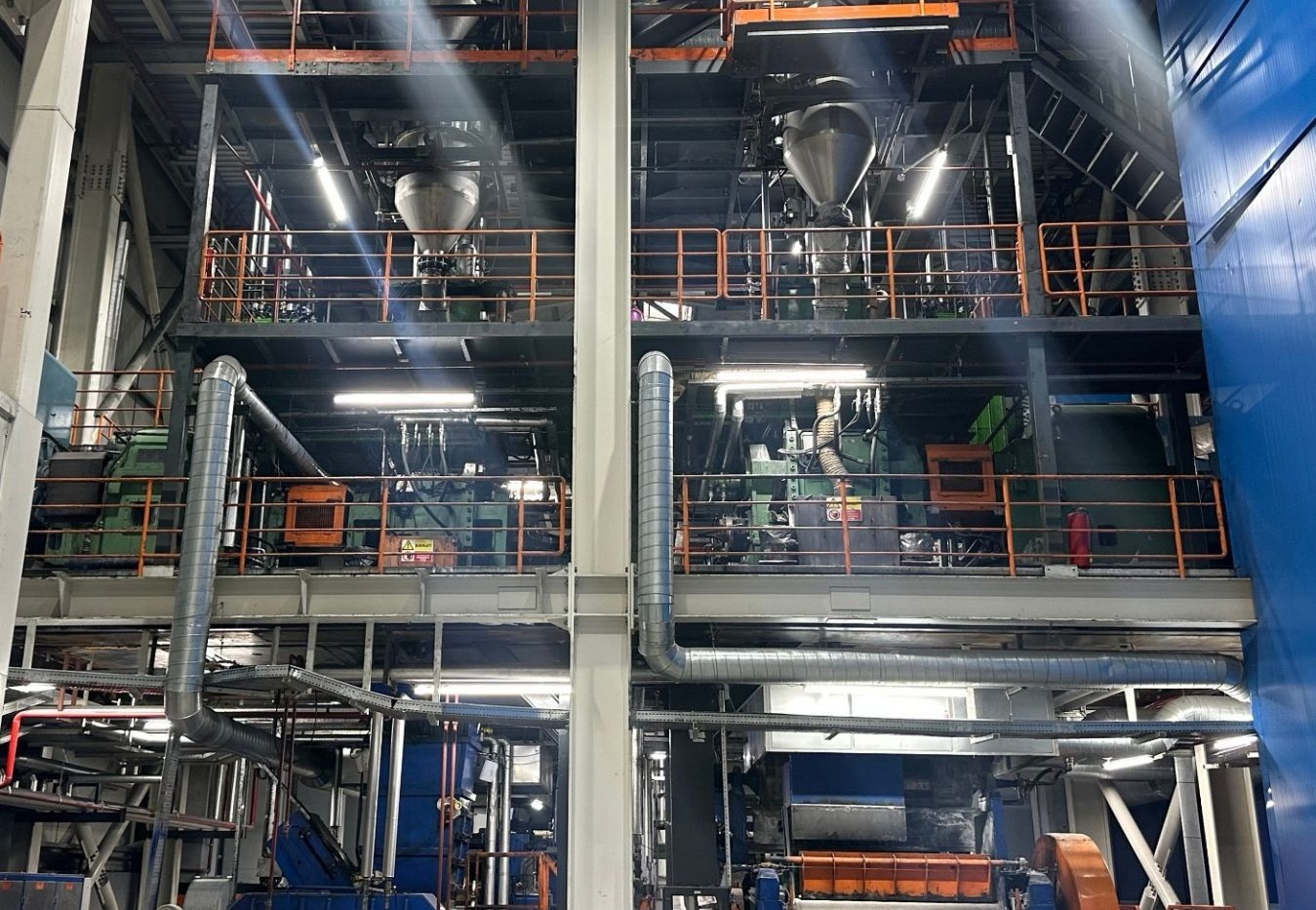
The company currently has two production sites in Turkey, located about 25 kilometres apart in the industrial region near Kocaeli, a major hub for tire manufacturing.
Bezek said the group has a total rubber mixing capacity of 150,000 tonnes per year, with the tire sector accounting for the bulk of production volumes while non-tire technical compounds represent a smaller but more specialised part of the business.
“Tire business is where we do the large volumes,” he said. “Non-tire and technical compounds are more specialised recipes – lower volume but with higher technical value.”
Over the past five years, the company has invested around €12 million in expanding its operations, including the development of a second facility equipped with two mixing lines and a fully automated chemical dosing system.
According to the CEO, investments in digitalisation and process optimisation have significantly improved operational efficiency across the business.
“Over the last three years we reduced our operational mixer workforce by around 30% through optimisation and digitalisation,” she said.
Through digitalisation, every batch produced by DRC now has its own ‘fingerprint’ so it can be tracked in real time.
At the new plant, automation has also transformed chemical dosing operations.
“We moved from eight employees to one employee per shift for chemical dosing because the system is fully automated,” Bezek explained, adding that the system has also improved quality consistency, particularly for small chemical additions.
Alongside geographic expansion, DRC is also seeking to broaden its role in the supply chain and position itself as a ‘technology partner rather than solely a compound supplier.’
“We are trying to understand what other services we can provide to the tire industry besides just compounding,” Bezek said.
The company is increasingly focusing on value-added services across the product development chain, including formulation, testing and collaboration on application development.
“Our approach is ‘from formulation to application’,” Bezek explained, “it is not only the compounding itself – there are many activities before and after compounding where we can add value for customers.”
These services include material testing, recycling initiatives, and joint research projects with universities and government-approved R&D centres, the CEO added.
This article is only available to subscribers - subscribe today
Subscribe for unlimited access. A subscription to European Rubber Journal includes:
Every issue of European Rubber Journal (6 issues) including Special Reports & Maps.
Unlimited access to ERJ articles online
Daily email newsletter – the latest news direct to your inbox