
Outside Track: Open, 'unshackled' automation can boost competitiveness
6 Feb 2026
ERJ's Outside Track reports on developments from across the global process and discrete manufacturing industries
London – Manufacturers across the UK and Ireland are operating in an increasingly tough environment, amid an uneven outlook for recovery, still rising costs, and productivity under strain, Schneider Electric officials set out at a press conference in London.
As background, Schneider cited a Make UK survey showing that 65% of product makers see ‘escalating energy and employment costs as a direct threat to competitiveness,” while skills gaps, transformation costs and legacy systems are holding back nearly 40% of firms.
Most strikingly, perhaps, was an analysis showing that UK and Ireland industrial electricity prices are among the highest in Europe: 18–20p/kWh in the UK and 24p/kWh in Ireland, compared with just 6-7p in the US and China.
These cost pressures are, in turn, widening the automation gap and limiting ability to modernise at pace, the 23 Jan First Friday Club press event – organised by Cadence Industrial & Technical Communications – was told.
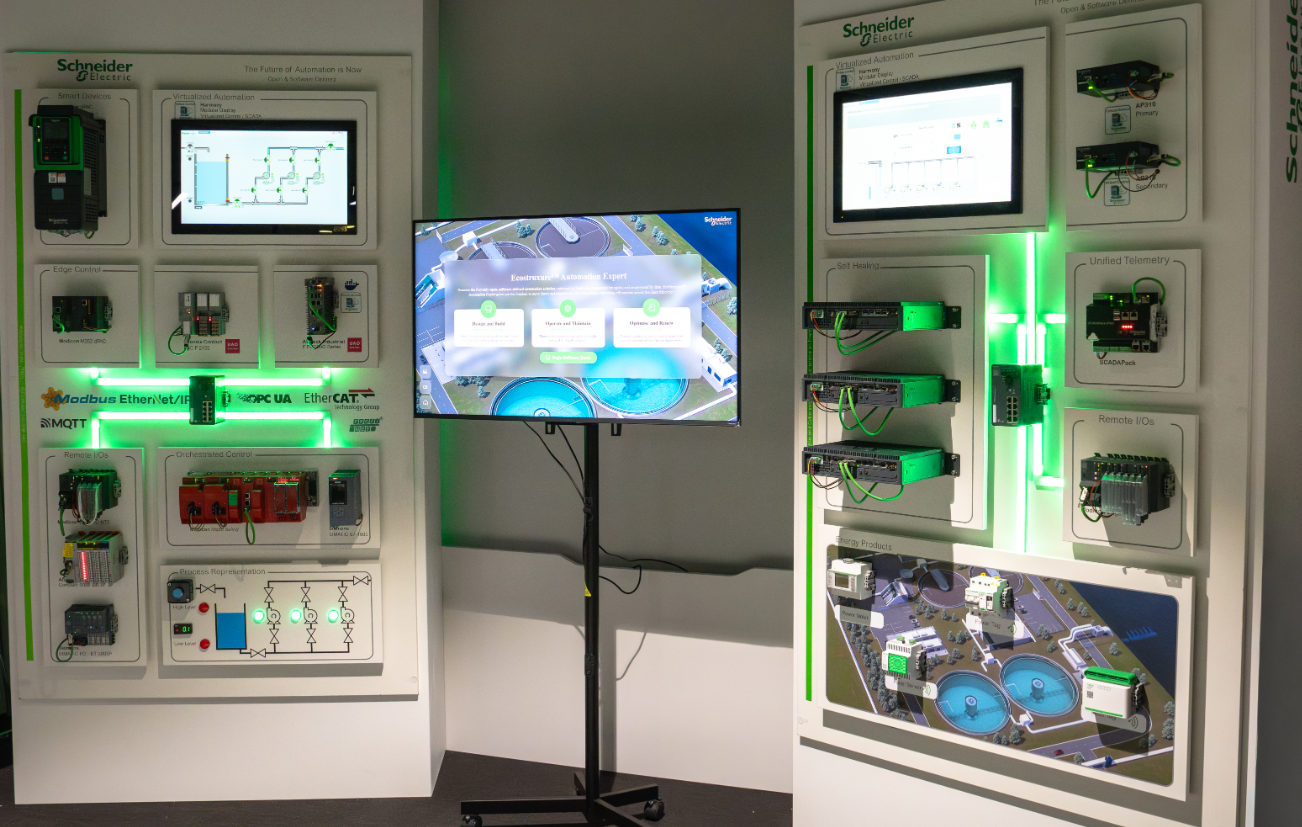
In response to these increasing competitive challenges, Schneider urged manufacturers in sectors ranging from automotive and construction to chemicals and food & beverages to embrace the latest open, software-defined automation (OSDA) solutions.
Traditionally, industrial companies have had their hands tied with closed automation systems, leading to an over reliance of automation technologies from a single vendor to ensure compatibility and continuity, officials explained.
This approach, they added, “hampers productivity and efficiency” and leads to a host of hidden costs around increased downtime, inefficiencies and compliance issues, fragmented workflows and delay.”
Indeed, Schneider noted to a recent Omdia industry study* showing that closed automation costs industry an estimated £8.4 billion (€9.5 billion) annually, equivalent to 4.5% of average annual turnover.
“UK manufacturers are facing real pressures, from high energy costs to legacy systems, but the opportunity to boost competitiveness exists today, said Kristin Baker, VP Industrial & Process Automation for UK & Ireland, Schneider Electric.
With OSDA, “we can modernise production at speed and unlock the agility and efficiency our industries need to compete globally,” Baker added at the London press gathering.
In the consumer packaged goods (CPG) sector, for instance, Neil Smith, global CPG president, Schneider Electric, said: “CPG manufacturers producing essential food, beverage and pharmaceutical products share many of the same challenges as other industrial companies.
According to Smith, legacy systems only allow manufacturers to advance and innovate at the pace of their vendors for locked-in solutions
By contrast, he said, “OSDA separates software from hardware in manufacturing production cycles much the same way the music industry digitalised to enable portable, anytime, cross-device playlists.
“It allows manufacturers to use the best tools for their specific business challenges, integrate new capabilities quickly, and evolve at ‘software speed’ rather than being bound by legacy systems.
“Once in place, open, interoperable architectures act as the building blocks for future transformation, empowering businesses to reach the speed and agility they need to be truly competitive.”
