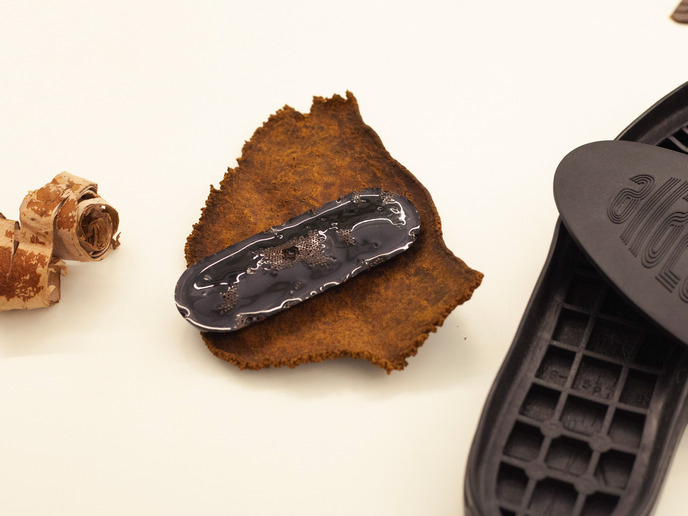
EU-funded project develops bio-rubber from birch bark
7 Jan 2026
Share:
Project conducted by Reselo can provide ‘scalable alternative’ to fossil-based, plantation-derived rubber
Stockholm – A European project has advanced a bio-based rubber from birch bark, offering what has been described as “a scalable alternative” to fossil-based and plantation-derived rubber.
The EU-supported Nordic Bio-Rubber project, conducted by Swedish start-up Resolo, has refined a birch bark bio-refinery process and demonstrated the resulting material, said Cordis, the European Commission's platform updates on EU-funded projects.
In a 29 Dec 2025 statement, Cordis said Reselo Rubber “can match performance needs while offering a more sustainable foundation for Europe’s rubber supply.”
“Our material is 100% bio-based and, when produced at scale, it will have an up to 90% lower carbon dioxide footprint compared to traditional, fossil-based rubbers,” said technical lead Thomas Baumgarten.
A core task for the project, according to Cordis, was preparing the technical groundwork for industrialisation.
As part of this, the team focused on optimising solvent recovery, improving process steps, and ensuring that the overall process design supports efficient manufacturing scale-up.
Birch bark availability, Baumgarten said, has already been assessed, revealing that Europe produces enough birch bark to support the production of industrial volumes of Reselo Rubber each year.
This, he noted, positions the material as a viable feedstock for a Europe-based rubber value chain.
According to Baumgarten many stakeholders within the forestry industry “have started to explore alternative use cases for birch bark,” and the project’s progress provides them with a high-value commercial opportunity.
In terms of performance testing, the team has collaborated with companies within footwear, automotive and tires to develop products to meet existing benchmarks.
Projects with multiple industrial partners have demonstrated that it is "a real drop-in solution, as it can be processed with existing production infrastructure,” Baumgarten added.
As for scaling the technology, said the Cordis report, “the technical foundation is solid, and manufacturing costs decrease at scale.”
However, it noted, ensuring that market demand grows in parallel is a key challenge.
“Matching production capacity to market demand presents the greatest risk when scaling our technology,” Baumgarten added.
To help scale the project, the Resolo expert said supportive policy measures, such as carbon-based taxation or incentives for bio-based materials, could accelerate adoption.
In addition to lowering emissions, the material avoids the environmental damage associated with natural rubber plantations, such as deforestation.
According to Cordis, birch bark is widely available across the Northern Hemisphere and often comes from FSC-certified forests, supporting responsible resource management.
This article is only available to subscribers - subscribe today
Subscribe for unlimited access. A subscription to European Rubber Journal includes:
Every issue of European Rubber Journal (6 issues) including Special Reports & Maps.
Unlimited access to ERJ articles online
Daily email newsletter – the latest news direct to your inbox