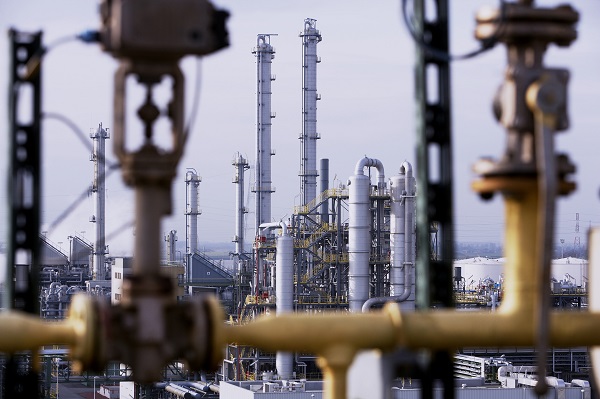
Steilemann warns of falling utilisation rates, plant closures, and rising relocation risks
Frankfurt – Germany’s chemical industry association VCI has called for “rethinking Europe” as it urged policymakers in Berlin and Brussels to take action to protect investment, production and jobs in the sector.
Presenting the association’s latest industry assessment 10 Dec, VCI president Markus Steilemann said the sector had endured another difficult year and that the outlook remained weak.
“Industry is sending out an SOS,” he said, adding the year 2025 “was another very difficult year for our sector, and the outlook isn’t any brighter.”
VCI figures show that production and producer prices in the chemical and pharmaceutical industry slipped by 0.5% year-on-year, while overall sales fell by 1%.
Chemicals production declined by 2.5%, with domestic and export sales both down 3%.
Capacity utilisation across the sector stood at around 70%, which Steilemann described as “a historic low and far from profitable.”
“Every second company,” he said, has “too few orders,” with order volumes down by more than 20% compared with 2021 in both domestic and international markets.
The pharmaceutical industry performed more robustly, with production up 3% year-on-year and sales rising by more than 4% this year.
Employment in the combined chemical and pharmaceutical sector fell by 0.5% this year, equivalent to around 2,400 jobs.
VCI warned that already announced plant closures and production relocations would lead to further losses.
Looking ahead, the association expects overall production in the chemical and pharmaceutical industry to stagnate next year, with output in chemicals forecast to fall by a further 1%.
With prices also under pressure, VCI estimates revenues will decline by around 2% year-on-year in 2026, both domestically and in exports.
Citing a recent survey of member companies VCI said 20% of respondents are planning to relocate or fully shut down production, while one in ten intends to close entire sites.
More than 40% expect further declines in domestic sales, and almost half anticipate additional pressure on profits.
The VCI leader attributed the weak outlook to “uncompetitive production costs, high regulatory uncertainty and slow approval processes.”
Furthermore, the industry is struggling with bureaucracy, high energy prices, and emissions and raw material costs.
External factors such as a strong euro, Chinese overcapacity, high US tariffs and broader geoeconomic uncertainty are adding to the strain.
Against this backdrop, Steilemann called for a more coordinated approach from policymakers.
“We can no longer afford confrontation,” he said, “we must face uncomfortable truths and look ahead.”
Calling for “combined efforts of politics, business and society,” the VCI boss outlined six priority areas to restore competitiveness in Germany and Europe.
These include securing production sites in strategically important sectors such as chemicals and pharmaceuticals, strengthening innovation through greater investment in R&D, and prioritising public spending on education, infrastructure, digitalisation and future technologies.
The association also called for “bold reforms” in energy and climate policy, public administration and social security systems, alongside a ‘credible long-term industrial strategy’ with clear priorities and reliable framework conditions.
At a European level, Steilemann said stronger coordination was essential.
“The European community can achieve parity with the US and China,” he said.
This, he said, “requires a common industrial policy and defence, a capital markets union, and a fully developed single market.”