WDK calls for 'strategic rubber reserves' in Europe
5 Nov 2026
Share:
Association urges inclusion of elastomer supply chains in civil and military crisis preparedness
Frankfurt, Germany – German rubber industry association WDK has called for a rubber raw-material strategy for Germany and Europe, including strategic reserves of essential materials and closer coordination between government and industry.
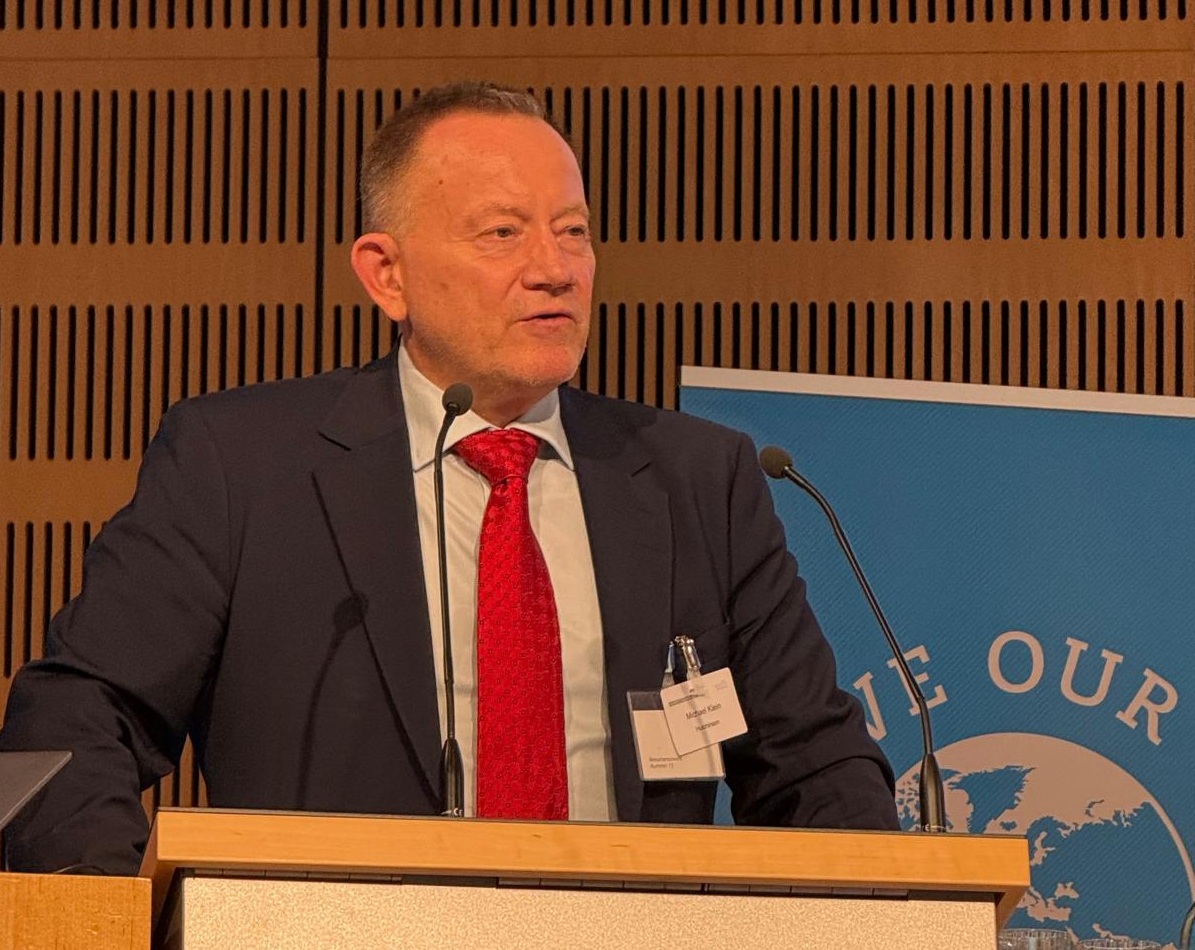
Speaking at the association's Autumn Conference on 3 Nov, president Michael Klein highlighted Europe's dependence on imported natural rubber and petrochemical feedstocks, and the importance of securing industrial supply chains.
"Natural rubber has properties that cannot be fully substituted in many applications," he told delegates.
At the same time, its production is concentrated in relatively few regions outside Europe.
Meanwhile, synthetic rubber depends on energy, petrochemical feedstocks, speciality chemicals and functioning logistics networks.
"Germany and Europe therefore need a rubber raw-material strategy as part of their civil and military crisis preparedness," Klein said.
The strategy should include diversified, long-term supplier relationships, alongside "strategic reserves" of essential rubber grades and feedstocks.
Klein also called for European rubber processing and compounding capacity, research into alternative raw-material sources and recyclable materials, and improvements in resource efficiency.
Regular "stress tests" should also be conducted jointly by industry, researchers and government agencies, he said.
The WDK president highlighted the importance of rubber components in vehicles, aircraft, ships, sensors and other critical applications.
"A high-technology system can consist of thousands of components and still fail because of a missing seal, an unavailable hose or an unsuitable elastomer," he said.
For this reason, the rubber industry should be included in security and defence-related planning, covering production capacity, procurement, research and workforce development.
"Resilience costs money. A lack of resilience costs much more in a crisis," Klein said.
Referring to the EU's Critical Raw Materials Act, the WDK president said recognising the importance of secure supply chains was only a first step.
"It is not enough to put a raw material on a list," he said.
What mattered was whether materials, processing capacity, formulation expertise, tools and qualified workers would actually be available during a crisis.
This article is only available to subscribers - subscribe today
Subscribe for unlimited access. A subscription to European Rubber Journal includes:
Every issue of European Rubber Journal (6 issues) including Special Reports & Maps.
Unlimited access to ERJ articles online
Daily email newsletter – the latest news direct to your inbox