Current supply deficit could ease with more tapping but ageing trees, slow replanting pose long-term capacity threat
Singapore – Natural rubber (NR) prices could face near-term downward pressure as high prices encourage increased tapping, but longer-term supply constraints could support a “structurally firmer” market, according to the International Rubber Study Group (IRSG).
In its October review of NR markets, IRSG said prices strengthened sharply during 2026, reaching multi-year highs amid “tight supply, firm consumption, elevated crude oil and synthetic rubber prices and weather uncertainty”.
The rally accelerated during the third quarter, with September prices for Indonesian SIR20 up 39% year-on-year, Thai STR20 33%, Malaysian SMR20 34%, European TSR20 68% and Indian RSS3 46%.
In addition to 'immediate drivers' such as structural tight supply and strong demand, IRSG noted that a developing El Nino could present another potential supply risk.
However, the organisation said that the current deficit does not necessarily indicate an absolute shortage of productive capacity.
Global NR production potential is estimated at 19.6 million tonnes under full tapping, compared with current production of roughly 15.1 million tonnes, it said.
This leaves “a sizeable buffer” of mature but currently untapped capacity which could be brought into production in response to higher prices.
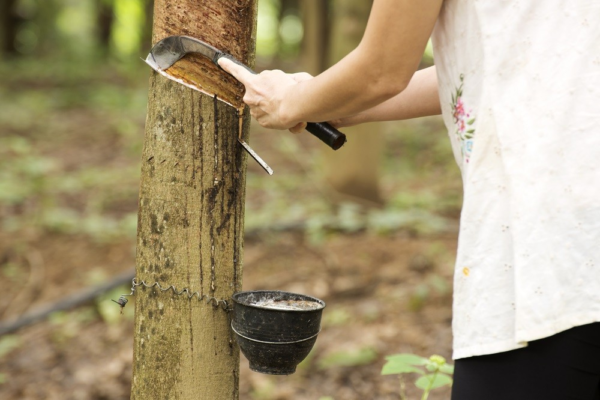
“If prices remain attractive, producers have a stronger incentive to bring untapped areas into production and increase tapping activity or frequency in existing plantations,” the IRSG said.
This could raise NR supply relatively quickly, potentially putting pressure on prices, particularly if it coincides with weaker downstream consumption.
IRSG also highlighted the role of crude oil and petrochemical feedstock prices, noting that elevated oil and feedstock prices support synthetic rubber prices.
This, it said, reduce substitution pressure on NR, while a decline in crude prices could weaken that support.
As a result, the interaction between “tapping activity, consumption, crude/SR prices and weather conditions” would largely determine whether the current price momentum continues in the short term.
The longer-term picture, however, could be “very different,” IRSG warned.
"The current 19.6 million tonne potential capacity provides an important supply buffer, but that buffer should not be assumed to remain unchanged," it said.
According to IRSG, global NR production increased from around 10.1 million tonnes in 2007 to 13.9 million tonnes in 2018, but growth slowed “considerably” since then, with production reaching only around 15.0 million tonnes in 2025.
Meanwhile, existing rubber trees continue to age, while insufficient replanting and limited new planting could gradually reduce future productive capacity.
The issue is further compounded by the fact that newly planted rubber trees require several years before becoming tappable.
At the same time, the underlying demand base continues to expand.
According to the report, the global vehicle parc is forecast to increase from around 1.74 billion vehicles in 2026 to 1.86 billion by 2030.
Meanwhile, annual tire production is projected to rise from roughly 2.06 billion to 2.19 billion units.
The expanding vehicle parc will continue to enlarge the replacement-tire market even if growth in new vehicle production remains moderate, IRSG added.
The transition towards electric vehicles will also have potential implications for future NR demand as greater weight, high torque and demanding performance requirements change tire design and material requirements.
These trends, IRSG noted, create an important distinction between the current market and potential future supply constraints.
“Today's NR deficit exists while there is still a sizeable buffer of untapped mature capacity,” the group said.
In future, however, ageing trees and insufficient replanting could reduce that buffer just as tire and rubber consumption continues to expand.
“That would be a fundamentally different situation,” the IRSG said.
“Today's shortage can potentially be addressed by tapping more of the trees that already exist. A future shortage may require trees that have not yet been planted.”
Over the short term, therefore, high NR prices could stimulate additional tapping and eventually moderate the current rally, particularly if additional supply coincides with softer consumption.
Over the longer term, however, continued growth in vehicle and tire markets, combined with ageing plantations, limited new planting and a shrinking untapped-capacity buffer, could support a “structurally firmer NR price environment”.
A smaller supply buffer would also leave prices more exposed to short-term disruptions from floods, excessive rainfall, drought or extreme heat.