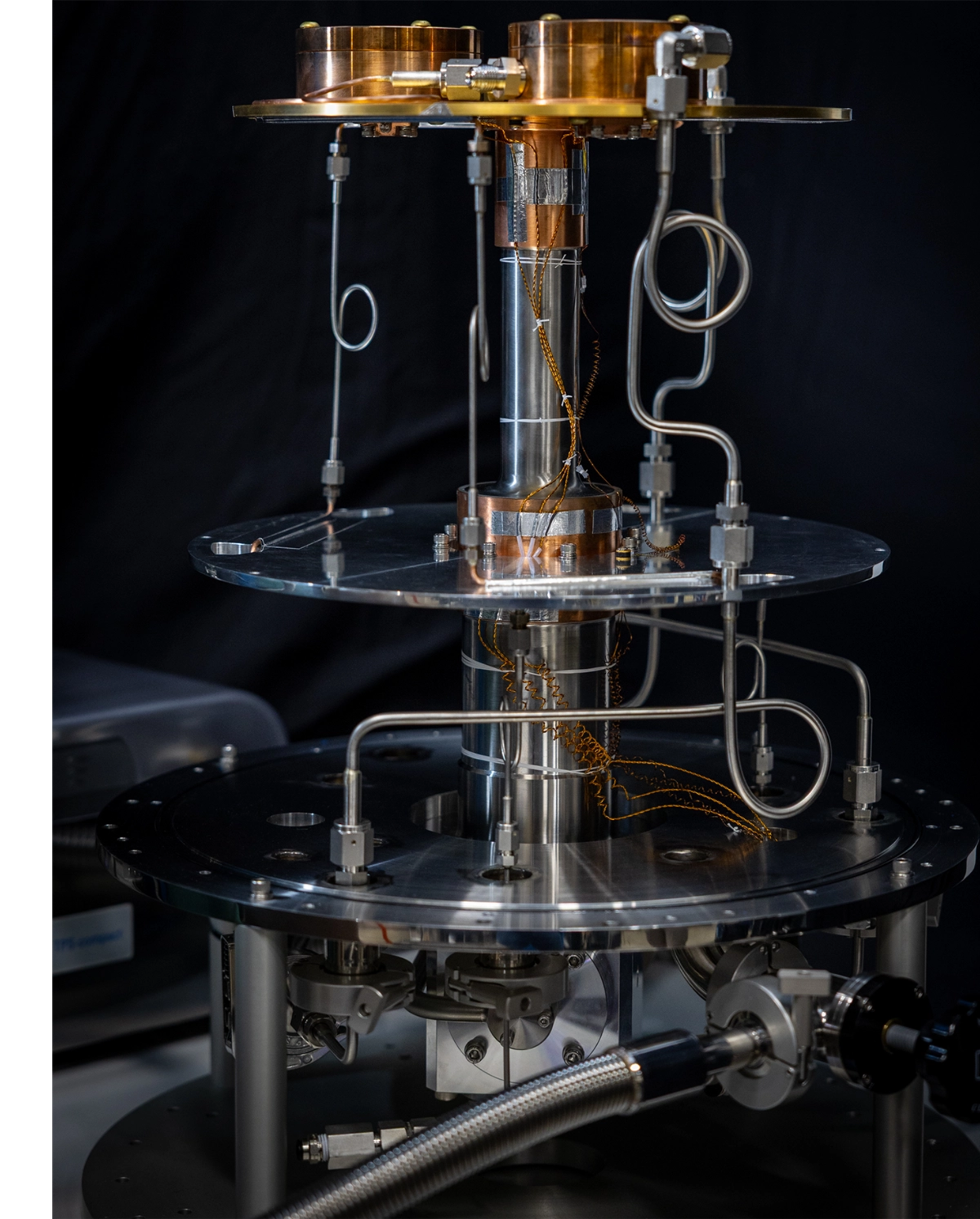
Expands in-house validation with addition of cryogenic leak, supercritical CO2 testing capabilities
Lansdale, Pennsylvania – Greene Tweed (GT) has expanded its testing infrastructure with the addition of cryogenic leak and supercritical CO2 rapid gas decompression (RGD) testing capabilities.
These investments expand Greene Tweed’s support for “mission-critical industries,” including semiconductor, aerospace, and energy, as well as emerging opportunities in hydrogen and carbon capture, utilisation and storage (CCUS), GT said 3 Sept.
The cryogenic leak testing system evaluates sealing performance at temperatures as low as 4 Kelvin (-269°C / -452°F) with a tolerance of +/-0.08 Kelvin, according to the US supplier.
The system uses “a high-vacuum chamber, specialised thermal shielding, and highly sensitive helium leak detection technology capable of reading helium flow down to 5E-12 atm*cc/s,” it added.
This extends GT’s internal cryogenic testing range to reflect conditions in cryogenic semiconductor etch processes, aerospace and space systems, and emerging liquid hydrogen applications.
For customers developing components for ultra-low-temperature environments, the system provides application-relevant insight into seal behaviour ‘before fluoropolymer solutions enter the field.’
GT said it also added “supercritical CO2 RGD” to its testing portfolio, supporting the rapidly growing CCUS market.
The in-house testing process evaluates materials and sealing solutions under harsh supercritical CO2 conditions aligned with industry standards, such as ISO 23936-2 or custom application conditions up to 350°C and 5,000 PSI.
Through the process, GT said it can generate performance data quickly, “with highly accurate results for valves, pipelines, compressors, storage vessels, and other CCUS infrastructure.”
"The next generation of semiconductor, aerospace, hydrogen, and CCUS technologies are pushing the boundaries of material science," said Cory Massey, senior manager of product engineering and simulation.
The investment, said Massey, will “provide the future cutting-edge material applications demanded by our customers’ most extreme, can’t-fail operating conditions.”
Also commenting, president and CEO Magen Buterbaugh, said the investment strengthened GT’s ability “to tackle complex, high-stakes challenges alongside our customers, while accelerating the journey from development to deployment."
This article is only available to subscribers - subscribe today
Subscribe for unlimited access. A subscription to European Rubber Journal includes:
Every issue of European Rubber Journal (6 issues) including Special Reports & Maps.
Unlimited access to ERJ articles online
Daily email newsletter – the latest news direct to your inbox