Sumitomo Rubber to study effects of tapping frequency on NR quality
20 Aug 2026
Share:
Collaborates with Thai research institutes, universities to address productivity and labour issues
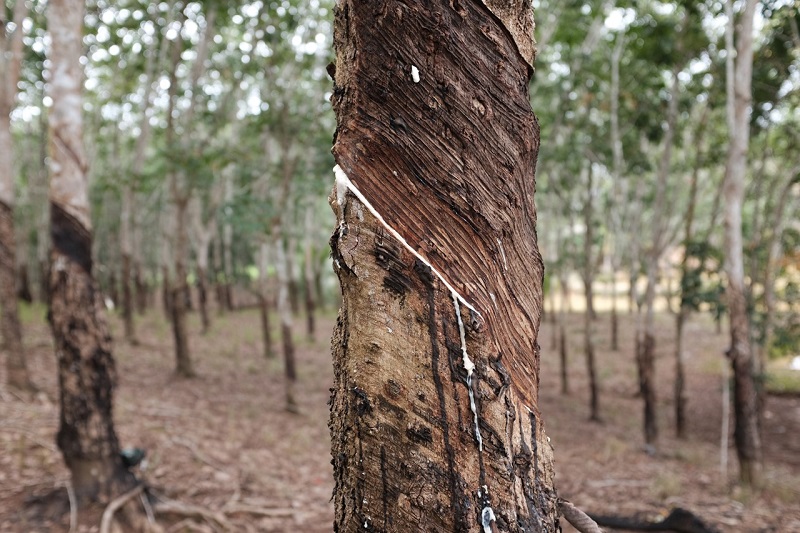
Bangkok – Sumitomo Rubber Industries (SRI) has signed a joint research agreement with Thai research institutions and universities to investigate “low-frequency tapping systems” for natural rubber (NR) trees.
Aimed at improving productivity and supporting more sustainable NR procurement, the study involves reducing the tapping frequency of rubber trees to investigate its impact on the quality and internal structure of the rubber.
The research will also analyse the challenges faced by rubber farmers in adopting the systems, as well as the factors that could facilitate such adoption, SRI said on 19 Aug.
As part of the project, an international research platform – the Hevea Research Platform in Partnership (HRPP) – has been established, with partners including the Rubber Authority of Thailand (RAOT), the French Agricultural Research Centre for International Development (CIRAD), Khon Kaen University and Kasetsart University.
According to SRI, NR production in Southeast Asia faces challenges from fluctuating rubber prices, climate change and labour shortages.
In Thailand, in particular, the shortage of tappers “has become increasingly severe”, with smallholder farmers becoming more dependent on an ageing workforce and migrant workers.
The low-frequency tapping system reduces the frequency at which latex is collected from rubber trees.
As the process “saves the labour required for tapping operations”, the system can potentially “help address labour shortages in natural rubber-producing regions,” SRI said.
Furthermore, SRI said studies have shown that, using a plant growth regulator that stimulates latex production, tapping once every three days can achieve effective productivity and rubber quality compared with the conventional practice of tapping once every two days.
The findings have been published in two peer-reviewed journal articles, according to SRI.
Research, the Japanese group said, is also under way into tapping once every four, six and 10 days, but the quality and properties of the rubber produced under these tapping frequencies “have not yet been fully elucidated.”
SRI added that further investigation was also needed into the challenges associated with adopting such systems, including changes in cost and the labour burden for rubber farmers and factors that could facilitate their adoption.
SRI said it would apply “the technologies and insights gained through this project” to help advance sustainable natural rubber procurement.
This article is only available to subscribers - subscribe today
Subscribe for unlimited access. A subscription to European Rubber Journal includes:
Every issue of European Rubber Journal (6 issues) including Special Reports & Maps.
Unlimited access to ERJ articles online
Daily email newsletter – the latest news direct to your inbox