Company expects full transition of Camso to be completed by March 2027
Mumbai, India — Ceat Ltd has reported double-digit growth for both the fourth quarter and full year FY2026 (ended 31 March), with management highlighting “very strong” performance across replacement, OEM and international markets.
For the quarter ended 31 March, consolidated revenue from operations rose 23.3% year-on-year to INR42.1 billion (€378 million), while earnings (EBITDA) increased 52.0% to INR5.9 billion, Ceat reported 29 April.
Earnings margin improved to 14.2%, up 267 basis points.
For the full year, Ceat reported revenue of INR156 billion, up 18.6% year-on-year, while earnings increased 37.9% to INR20.6 billion, with margin expanding to 13.2% from 11.3% a year earlier.
Commenting on the fourth quarter results, Ceat managing director and CEO Arnab Banerjee said growth was broad-based.
“Replacement grew in mid-teens. OEM also grew around mid-teens, and International Business had a very strong quarter,” he said, pointing in particular to gains in off-highway and passenger tires in Western Europe.
Within the replacement segment, “two-wheeler continues to do well and grew strongly in the mid-20s,” said Banerjee.
Meanwhile truck, bus and farm segments “came back strongly… in low teens,” while passenger car and light vehicle replacement demand grew in “mid-single digit.”
According to the Ceat chief, OEM demand remained firm, with “very strong double-digit growth” in passenger cars, supported by premium vehicle fitments, while truck and bus and farm segments also posted double-digit gains.
Internationally, the company reported “very strong growth” across segments, especially in passenger tires in Europe and the US.
However, Banerjee noted that “sales to Middle East have been severely impacted in the fourth quarter” due to geopolitical tensions.
Despite the strong results, Ceat flagged a sharp escalation in input costs.
“We are entering a steep inflation zone in the first quarter,” Banerjee said, warning raw material prices could “shoot up to 15% plus,” and may “reach closer to 20%” by the end of the first quarter.
“Price increase is an imperative,” he added, noting that hikes are already being implemented across replacement and international markets, while OEM adjustments will come with a lag.
Looking ahead, Ceat expects demand to remain ‘broadly supportive,’ although “the broader demand environment remains clouded by the West Asia conflict, and related fuel price expectation.”
The company said replacement demand for medium and heavy commercial vehicles is expected to grow in “high single digit,” while two-wheeler demand continues to exceed pre-Covid levels.
Passenger tire demand in replacement has been “somewhat muted” but could improve following stronger OE sales.
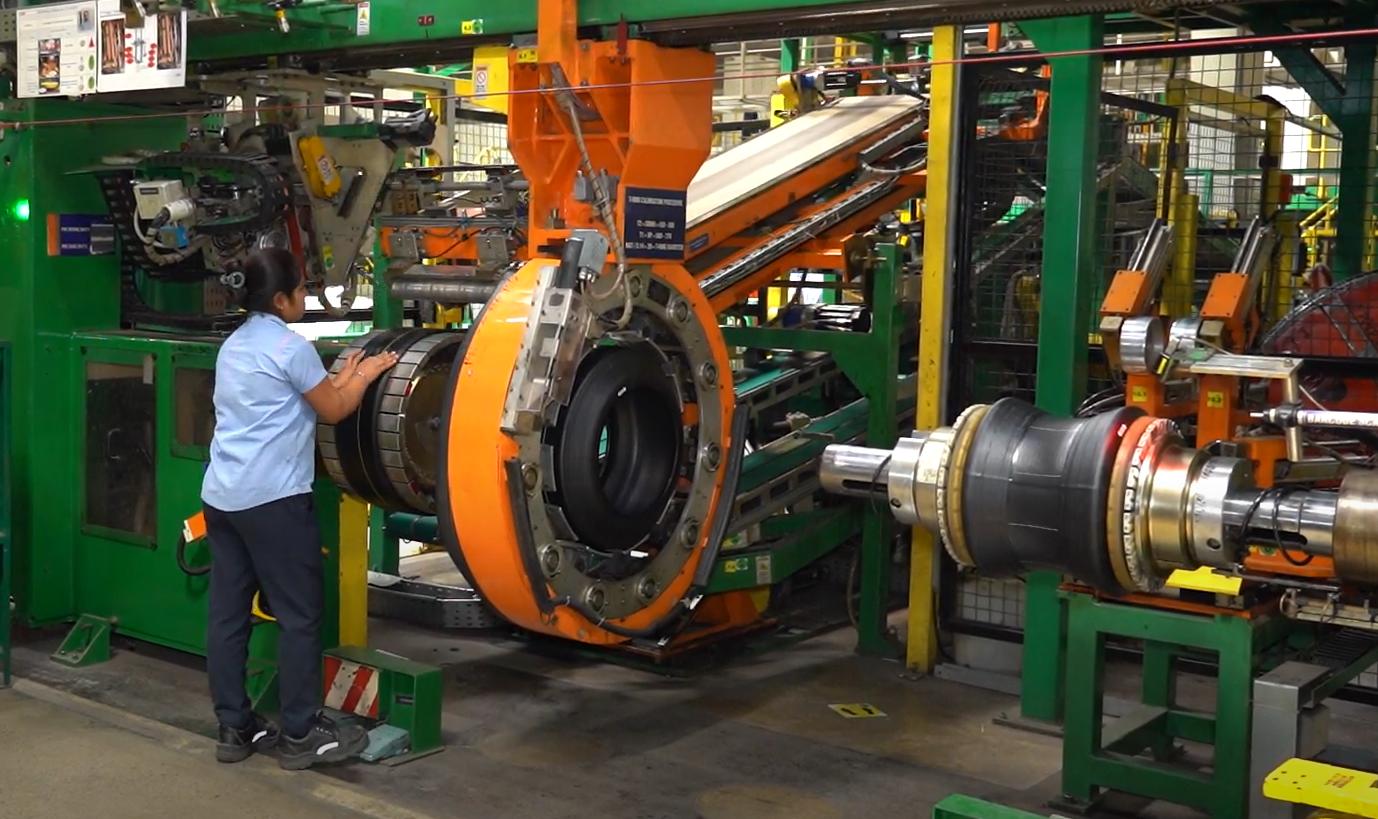
On the Camso business, Ceat said operations are “continuing smoothly” but remain in transition.
The unit’s revenue was down 5% sequentially, said Banerjee, noting that the production was affected due to non-availability of fuel locally for some time in Sri Lanka
“The CAMSO business is in transition and will continue to be in transition for at least four more quarters,” Banerjee said.
Full control of the value chain is expected by end of fiscal year 2027 (started 1 April), according to the Ceat chief.
He noted that customer-facing operations should be integrated by the first half of FY27, while upstream capabilities, including compounding and calendering, are expected to be completed “by end of fourth quarter.”