Partners to evaluate mass-production use of pyrolysis-based material under circular economy push
Kobe, Japan – Dunlop, part of Sumitomo Rubber Industries (SRI), has signed a memorandum of understanding (MoU) with Cabot Corp. to commercialise the company’s “resource-recycling reinforcing carbon” for tire applications.
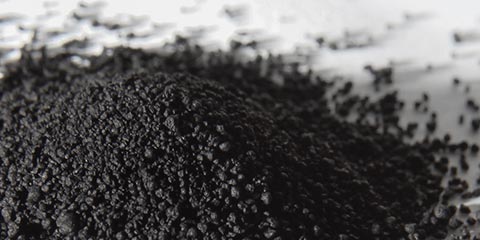
Under the agreement, announced 22 Jan, Dunlop will evaluate, test and validate the use of the recycled reinforcing carbon derived from pyrolysis of end-of-life tires which have been further processed through Cabot’s Evolve sustainable technology platform.
According to SRI, the new material is claimed to offer “enhanced performance” compared with other carbon black alternatives and will help lower the carbon footprint of tire production if adopted at scale.
“This is the first time we are considering adopting this new material in our tire production, and we recognise that it will play an important role in both companies’ efforts to reduce carbon dioxide emissions,” said SRI.
Cabot, meanwhile, will focus on expanding its recycled carbon technology to meet anticipated market demand, said the release.
In a separate statement to ERJ, Cabot explained that it uses reclaimed carbon from ELT pyrolysis and further processes it through its "patented regenerated carbon technology" to create rCB materials suitable for tire applications.
"This is a unique technology that enhances the performance of reclaimed carbon," the company said.
According to Cabot, rCB available on the market today can only be used in low loadings as it negatively impacts rubber performance.
To help address this challenge, Cabot’s technology produces a regenerated carbon that provides higher loadings of reclaimed carbon with similar performance to ASTM N300 series virgin carbon black.
As part of the deal, both parties have agreed to engage more deeply between technical teams to accelerate the commercialisation of the Cabot technology for use in tire applications.
Specific timelines are not disclosed, but both companies aim to move quickly to assess feasibility and market readiness.
This article is only available to subscribers - subscribe today
Subscribe for unlimited access. A subscription to European Rubber Journal includes:
Every issue of European Rubber Journal (6 issues) including Special Reports & Maps.
Unlimited access to ERJ articles online
Daily email newsletter – the latest news direct to your inbox