Says greater use of retreads could reduce crude oil imports, strengthen logistics sector
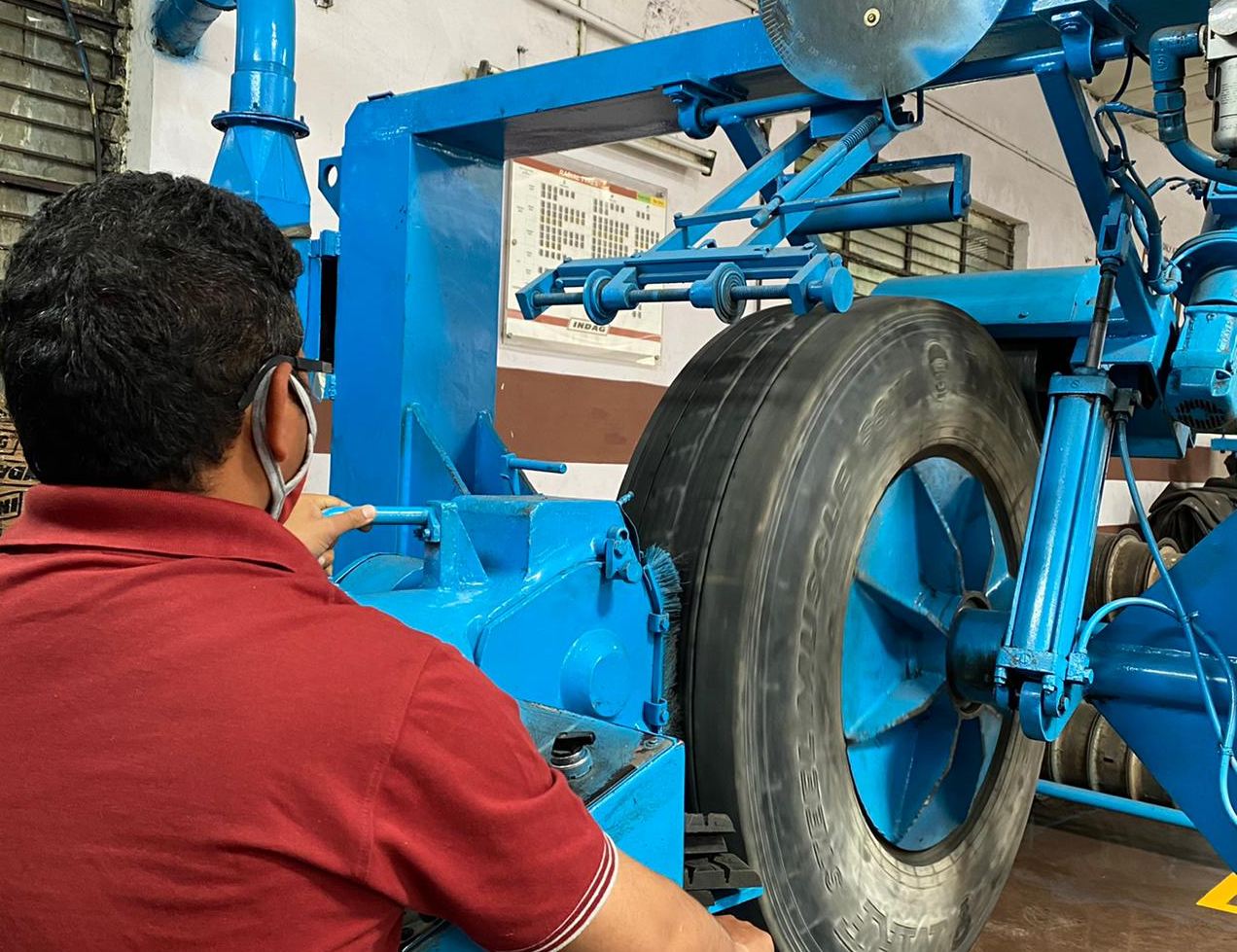
Mumbai — A senior BKT executive has called for wider adoption of tire retreading across India's commercial vehicle sector, arguing that the practice could reduce the country's dependence on imported crude oil and lower operating costs.
In a 20 July blog post titled ‘India's energy vulnerability has a tire problem’, Satish Sharma, SVP and director of business development and strategy at BKT, said India's exposure to oil shocks was "not merely about fuel prices."
“It is about deeper dependencies – on imported crude, imported materials, and a linear consumption model that prioritises replacement over reuse,” said Sharma.
While policy discussions often focus on measures such as strategic reserves and supply diversification, Sharma argued that "some of the most effective solutions lie elsewhere," including tire retreading.
"Tire retreading is not a marginal cost-saving tactic – it is rational economics," he wrote.
According to Sharma, retreaded tires typically cost 40-50% less than new products while delivering up to 80% of their mileage during the first retread life.
With proper maintenance, "a second retread... providing up to 50% additional tire life... is feasible in the Indian market."
Despite those advantages, retreading remains "under-leveraged" in India, he said.
Sharma contrasted India with Europe and North America, where retreading is "not viewed as a compromise" but is "standard practice."
He added that tire manufacturers claim "up to 5 retread lives of a single truck tire," with fleet operators supported by policy frameworks that "prioritise reuse before recycling."
He identified taxation, maintenance practices and industry fragmentation as the main barriers to wider adoption.
Despite its environmental and economic benefits, retreaded tires attract 18% goods and services tax, the same rate as new tires.
"Policy rhetoric encourages reuse; tax policy discourages it," Sharma said.
He also argued that India continues to treat truck tires "as consumables rather than assets."
"The casing – the structural backbone – is engineered to outlast the original tread and is designed for multiple life cycles," he wrote. "Discarding a premium casing after one life is not efficiency – it is avoidable loss."
Retreading is only viable if the casing remains intact, Sharma noted, adding that correct inflation pressure, axle alignment, load management and wheel rotation are essential.
"Without systematic improvements in maintenance discipline, retreading cannot scale, regardless of policy intent."
Sharma also said the industry remained fragmented, with much of the business historically conducted in the informal sector, resulting in "inconsistent quality and weak trust."
According to Sharma, India generates an estimated 1.5-2 million tonnes of waste tires each year, while retreading a single commercial vehicle tire saves about 12.5 gallons of crude oil compared with manufacturing a new tire.
With India importing more than 85% of its crude oil requirements, "this is not merely an environmental gain – it is economic prudence," Sharma wrote.
He estimated that the truck and bus radial replacement market exceeds 800,000 tires per month, but said the retread industry accounts for only 20-30% of that volume.
"In an ideal scenario," it should represent 70-80%, he added.
"If India is serious about building a resilient, circular logistics ecosystem, retreading must move from the margins to the mainstream at least for commercial vehicles," Sharma concluded.
"The solution already exists, embedded in an old industrial practice that aligns economic logic with environmental necessity."