Tire Tech '26: Conti to open expo with autonomous driving presentation
19 Feb 2026
Share:
Continental speakers to also present on self-driving tires, rCB, wear emissions and Euro 7 challenges
Hanover, Germany – Continental will open the technical conference at this year’s Tire Technology Expo, to be held 3-5 March in Hanover, with a presentation on tire technologies for autonomous driving.
Dr Andreas Topp, head of ‘platform development and industrialisation’ for passenger-car tires at Continental, will deliver the opening presentation 3 March, where he will outline how tire design is adapting to the requirements of self-driving vehicles.
“The future of self-driving vehicles has begun. We are developing tire technologies and products that meet the unique technical requirements of these vehicles,” said Topp.
“This includes topics such as interaction with smart vehicle dynamic controls, optimised fleet operations and tailored solutions for specific use profiles.”
In addition to autonomous driving, Continental experts will present on recovered carbon black (rCB), tire wear emissions beyond currently captured tire and road wear particles (TRWP), and development challenges linked to the Euro 7 regulation.
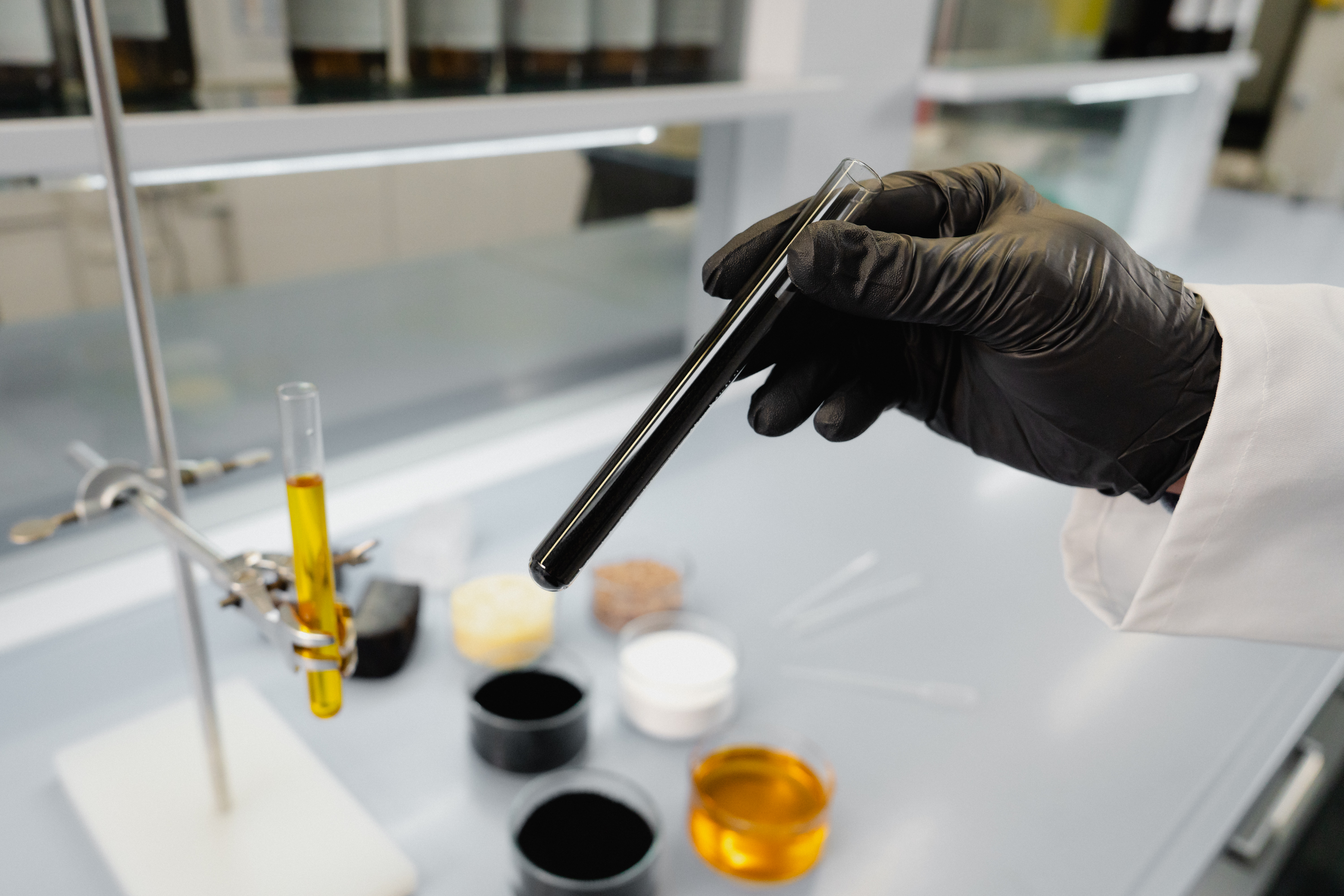
Prof. Jorge Lacayo-Pineda, a materials evaluation expert at Continental, will address the identification of recovered carbon black in vulcanised rubber compounds.
While used as a filler in tire materials, rCB is not considered as an equivalent to carbon black, due to its “heterogeneous composition, carbon-containing residues and thermal history.”
Lacayo-Pineda, said Continental, will discuss the challenges in ‘reliably identifying’ rCB in new rubber compounds through ‘suitable methods’ such as electron microscopy and molecular spectroscopy.
Dr Frank Schmerwitz, senior test engineer for tire wear at Continental, will examine tire wear emissions beyond currently captured TRWP.
Public debate has largely focused on TRWP, but, according to Continental, the particles collected “represent only part of a tire’s measured mass loss.”
Schmerwitz’s presentation will aim to provide “a more scientifically complete understanding of underlying emission pathways,” including the release of nanoparticles and the degradation of tire wear residue on road surfaces through exposure to oxygen and ultraviolet radiation.
Lastly, regulatory developments under Euro 7 will be probed by Continental’s Dr Pavel Ignatyev, who specialises in the physics of rubber friction and wear.
According to Continental, “binding limits for tire abrasion and standardised measurement methods under the Euro 7 standard provide both incentives and opportunities for innovation.”
Ignatyev will explain the parameters influencing tire wear and their relationship to the new requirements, using simplified models to illustrate the complexity involved and the remaining research challenges.
This article is only available to subscribers - subscribe today
Subscribe for unlimited access. A subscription to European Rubber Journal includes:
Every issue of European Rubber Journal (6 issues) including Special Reports & Maps.
Unlimited access to ERJ articles online
Daily email newsletter – the latest news direct to your inbox